Launch offer — valid today only

3rd Class Power Engineer: All Four Papers, One Topic per Page Every Topic Drawn, Every Calculation Worked Step by Step

Steam tables, Section I calculations, combustion and excess air, three-element drum level, transformers, pumps, turbines and refrigeration: in your course notes it's a wall of text. Here every topic fits on one page, with the drawing and what you need to remember. 109 drawn pages.

GET THE DRAWN PAGES

🔒 Secure checkout · PDF by email · 30-day guarantee

One topic per pagethe drawing shows you the equipment and the text walks you through it
109 drawn pages13 parts, from the four papers to exam day
Up-to-date sourcesSOPEEC 3rd Class syllabus, CSA B51/B52 and ASME Section I

This Is What the Pages You Will Study Look Like

One topic per page, the drawing that shows you how it works and the boxes with what you need to know:

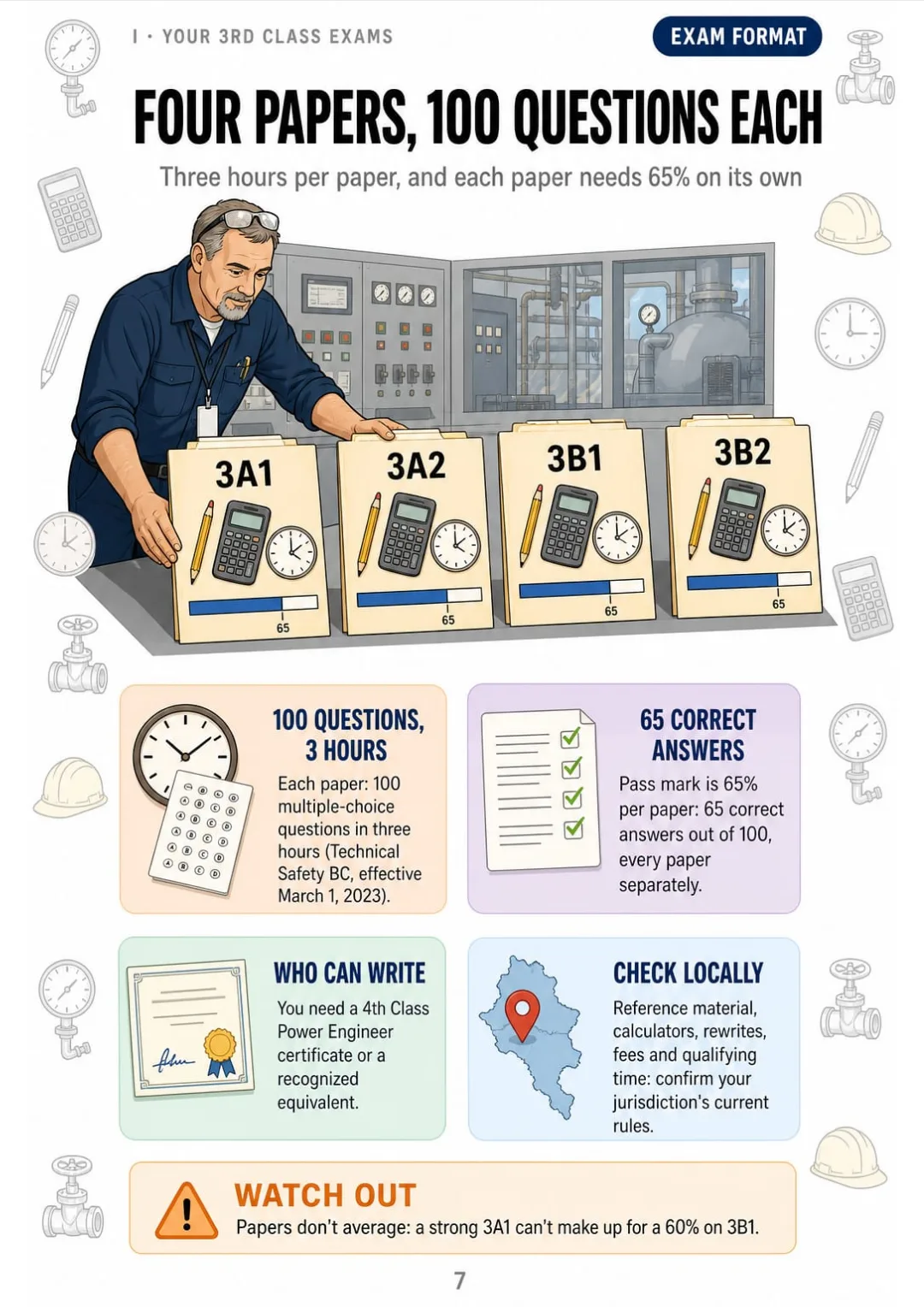
3A1, 3A2, 3B1, 3B2: 100 questions, three hours and 65% on each paper
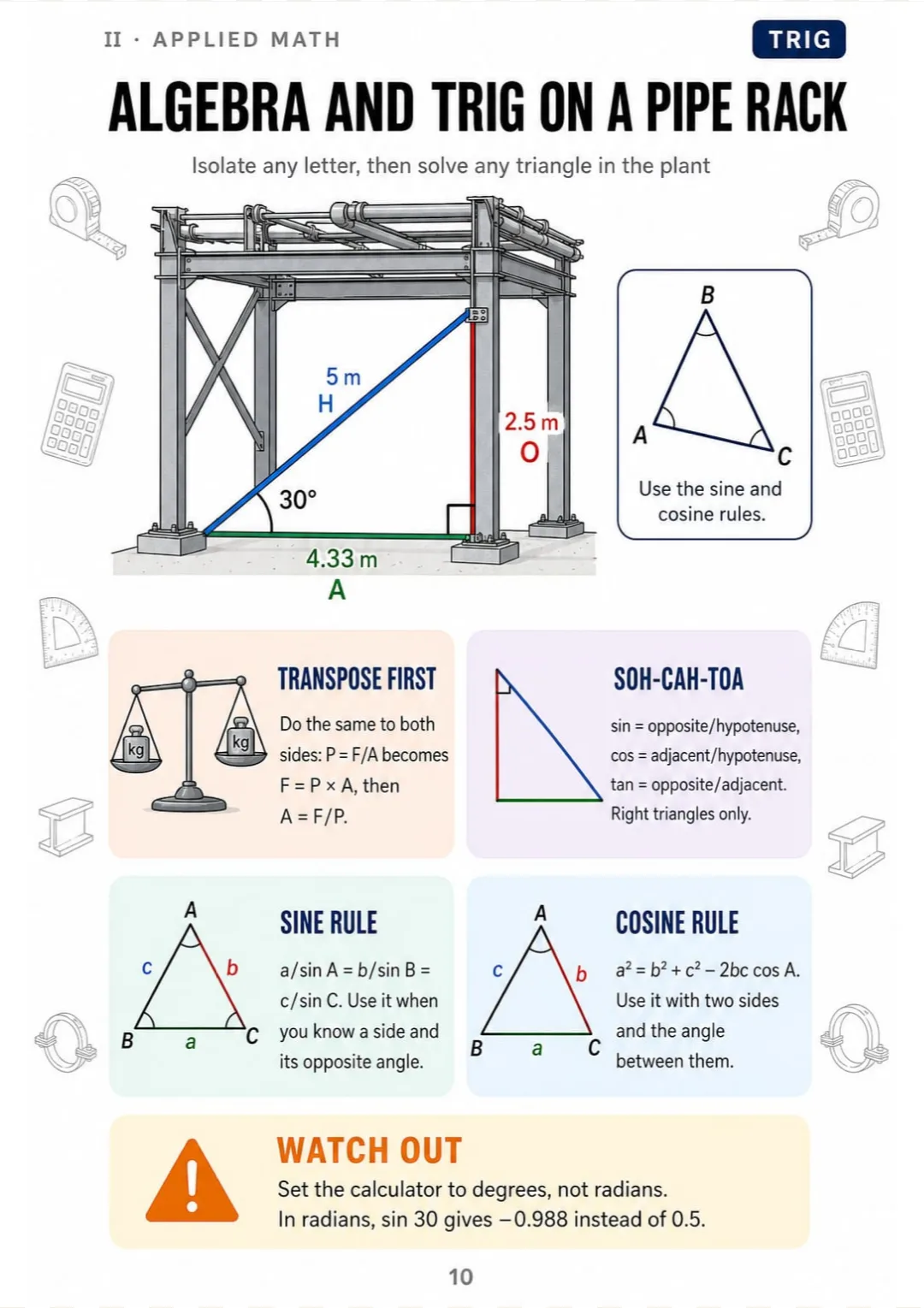
5 m brace at 30°: 5 × sin 30° = 2.5 m high, 5 × cos 30° = 4.33 m out
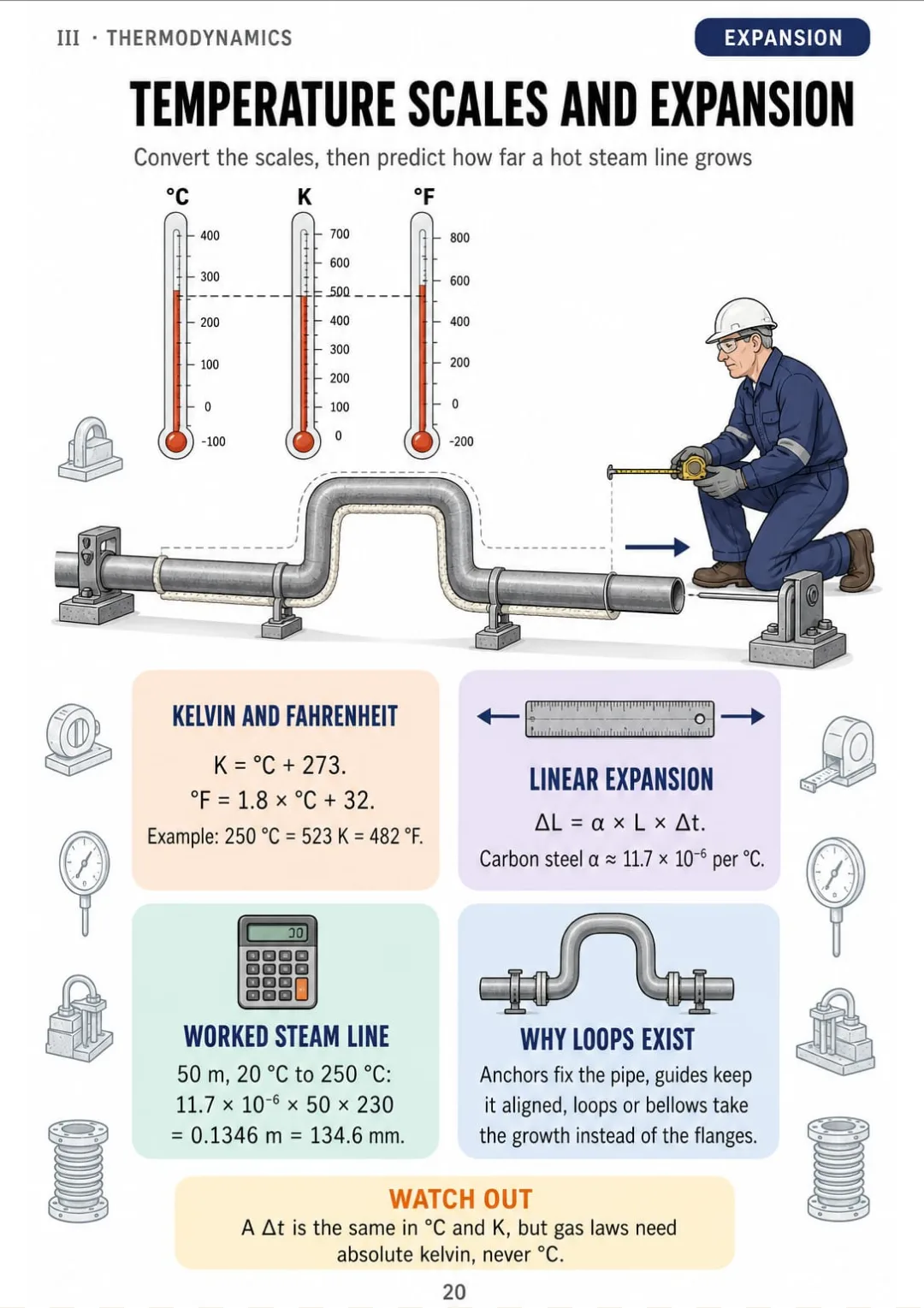
50 m of steel steam pipe heated from 20 °C to 250 °C grows 134.6 mm.
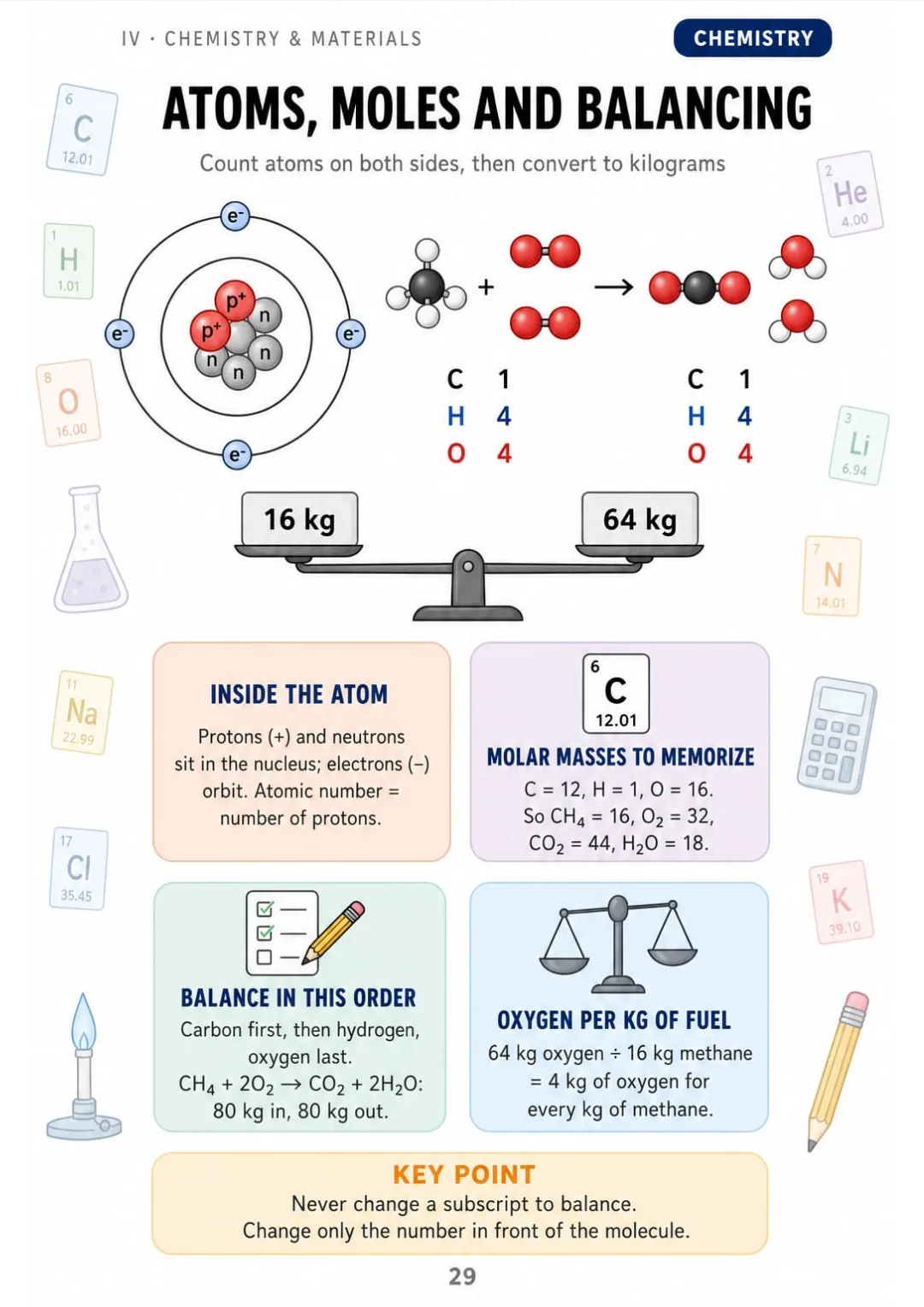
CH4 + 2O2 → CO2 + 2H2O: 16 kg of methane needs 64 kg of oxygen.
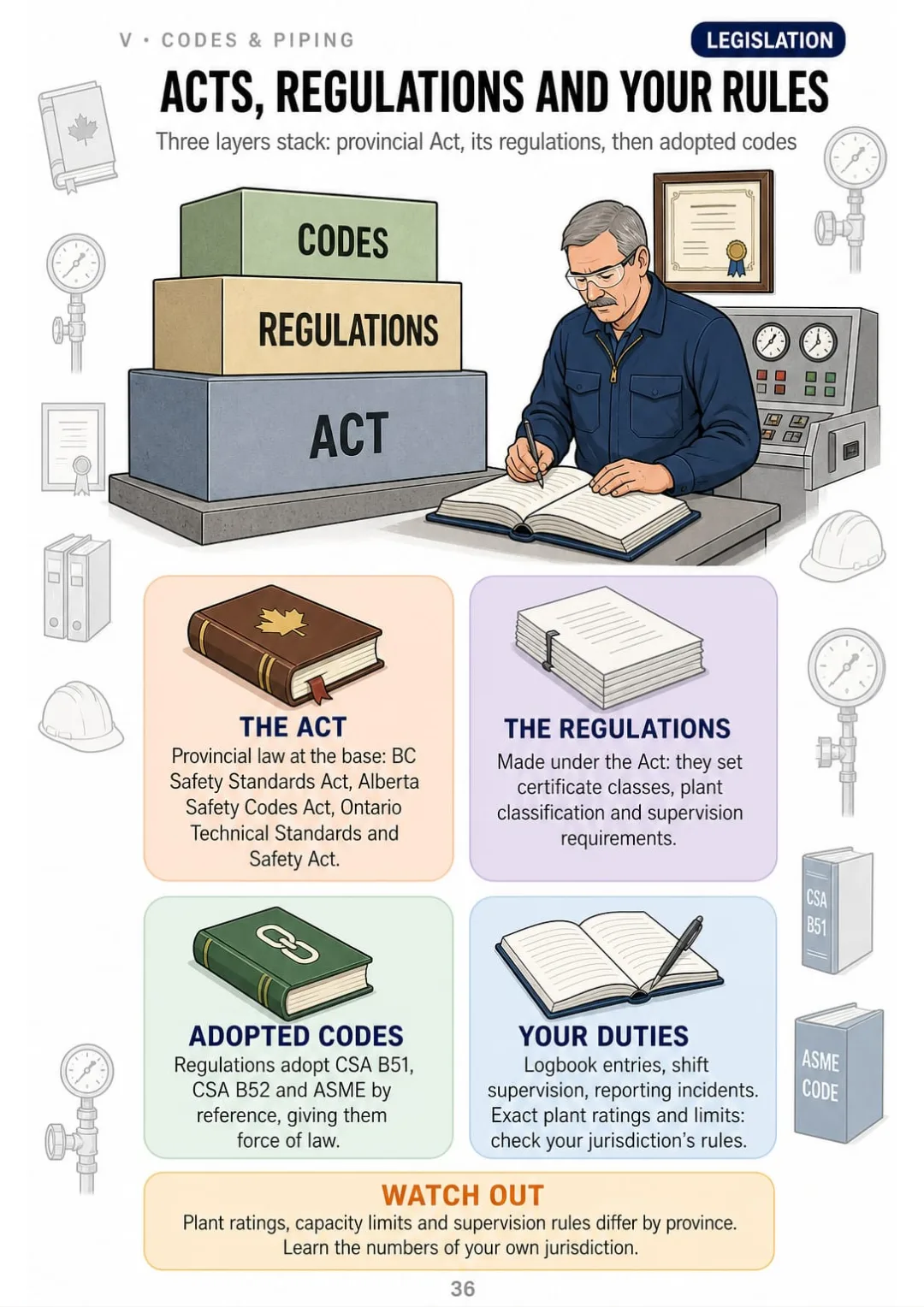
Provincial Act → regulations → adopted codes: the legal stack behind every power engineer's certificate.
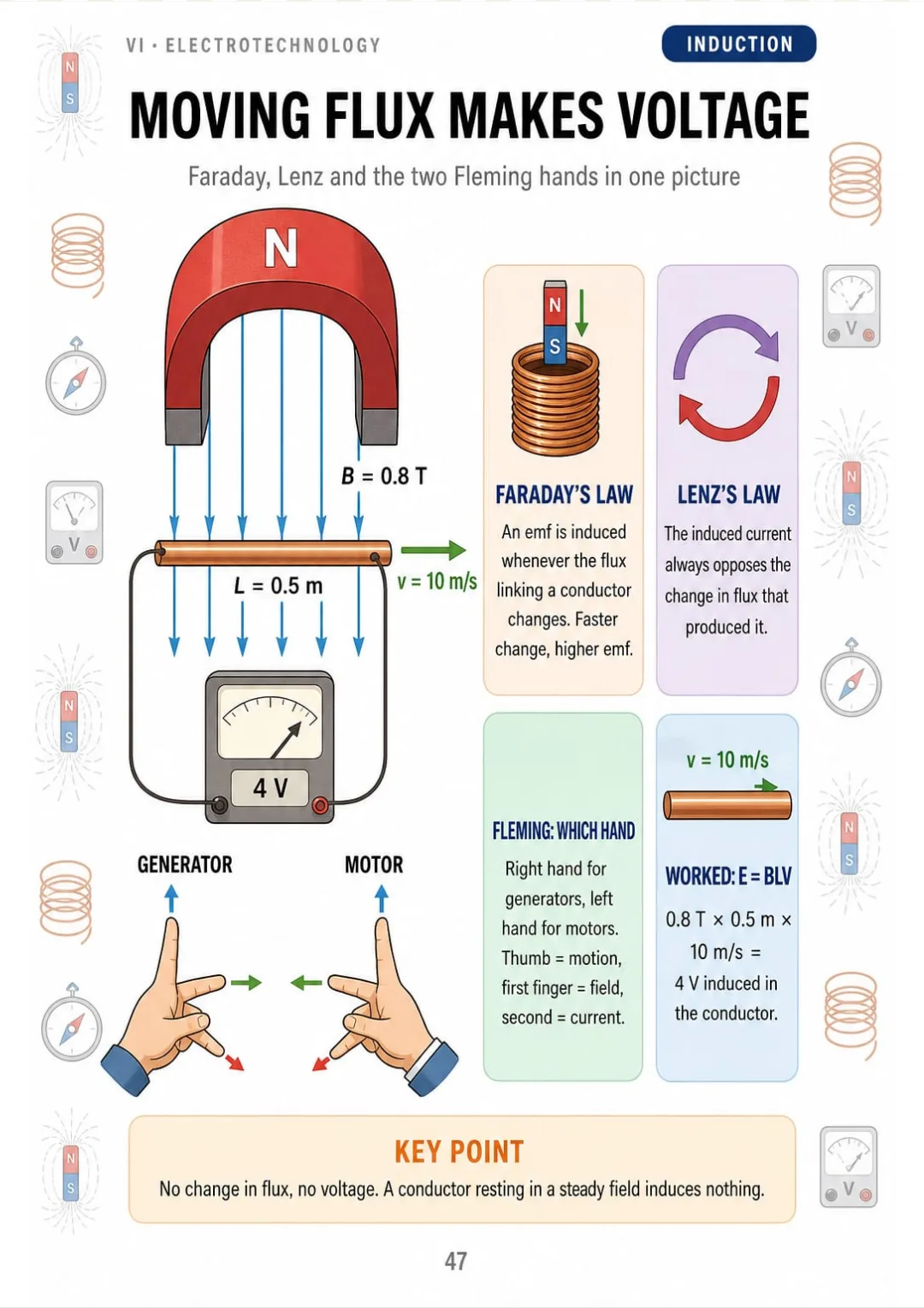
e = BLv: 0.8 T, 0.5 m and 10 m/s induce 4 V
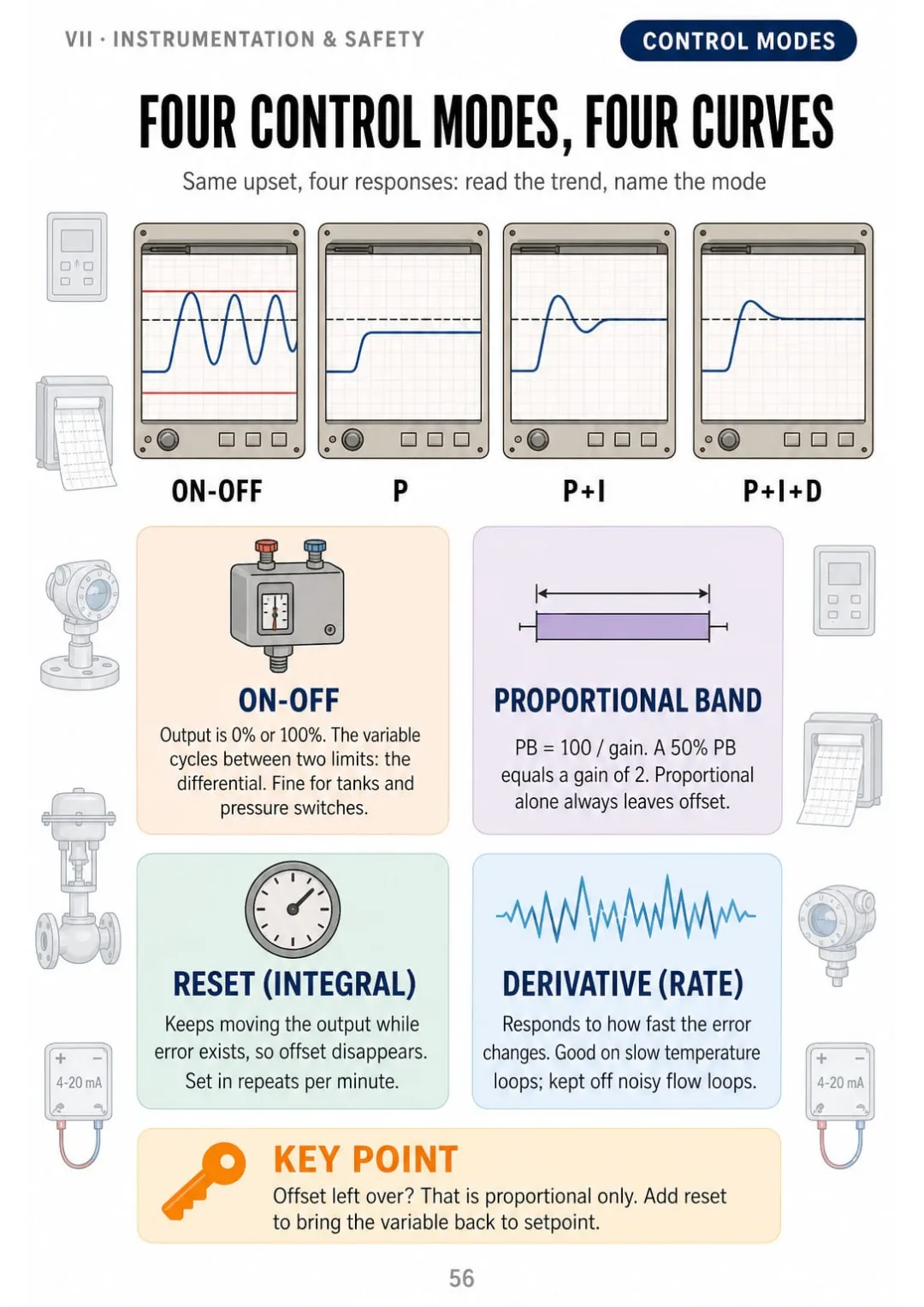
PB = 100/gain: 50% PB is a gain of 2, and only reset removes offset
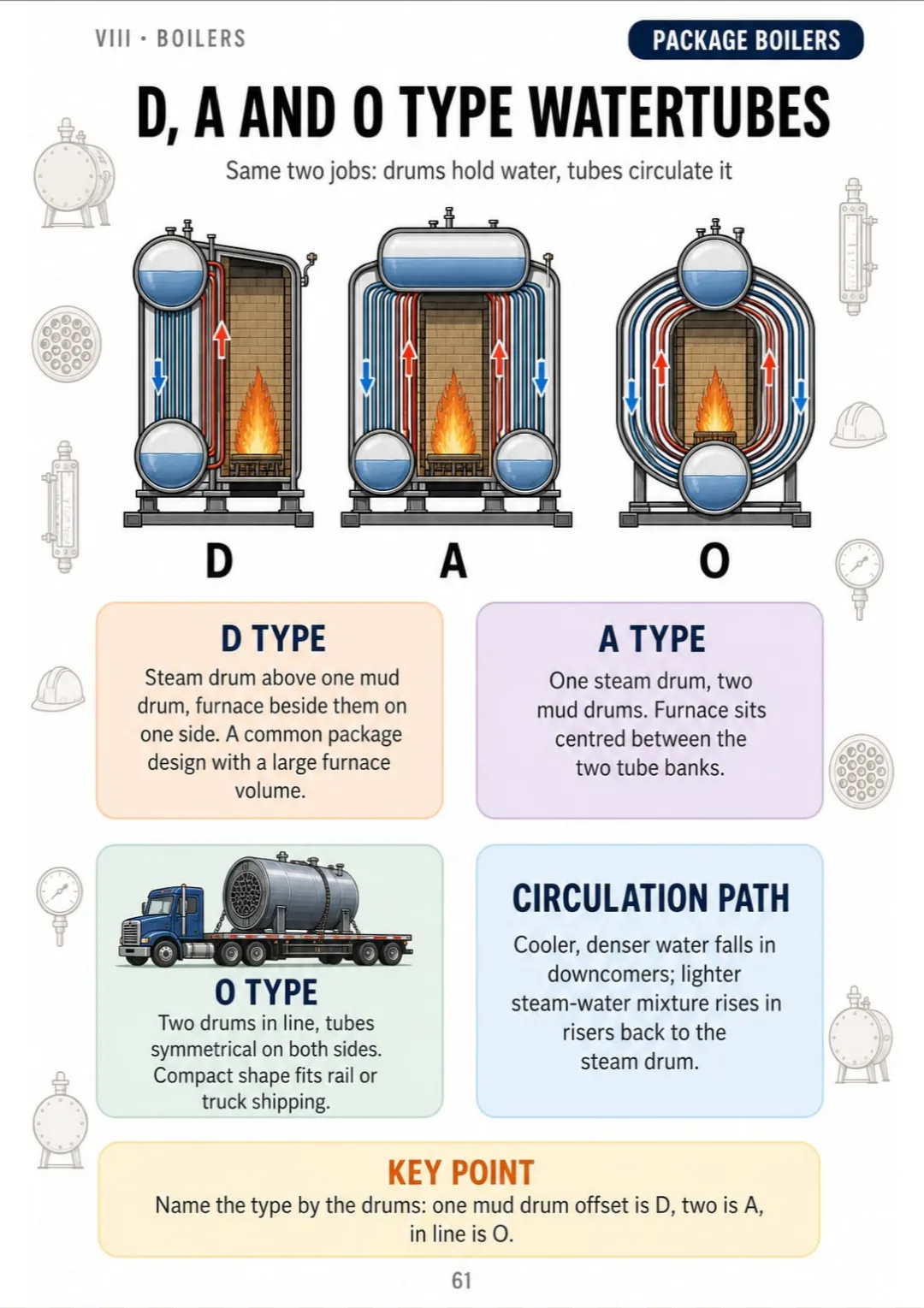
D, A and O type watertube boilers in section, with downcomer and riser flow

Swipe to see more →

These are real pages from the book. The table of contents is the full one: 13 parts and 103 topics.

It's Not That You Can't Remember. It's That Nobody Put It in Order.

You've read the thermal expansion section three times. You close the course binder...

...and you're not sure which temperature goes where, or why the answer comes out in millimetres. It was just lines of text, one after another.

50 m of steel steam pipe heated from 20 °C to 250 °C grows 134.6 mm.

Here expansion is one page: 50 m of steel steam pipe drawn from 20 °C to 250 °C, with the growth marked at the end: 134.6 mm, and the temperature scales side by side.

And on the pages next to it, each topic gets its own: dryness fraction, equivalent evaporation, heat transfer, the gas laws and the P-V diagram.

First you understand why the pipe grows. Then the order of the calculation sticks on its own.

SEE THE DIFFERENCE

Stop memorizing formulas you can't picture:

THIS
  • Pages and pages of dense text
  • Calculations without a single drawing
  • On the exam, you don't know where to start
Linear thermal expansion is the change in length of a solid member resulting from a change in its temperature. The change in length is obtained as the product of the original length, the coefficient of linear expansion of the material and the temperature difference, where the coefficient is expressed per degree Celsius and the result is given in the same units as the original length. For carbon steel the coefficient is commonly taken as approximately 11.7 × 10⁻⁶ per degree Celsius, and allowance for the resulting movement must be provided in the piping system by means of expansion loops, bends or expansion joints.
FOR THIS
  • Every calculation drawn
  • One topic per page, with the rules in boxes
  • You remember it because you've seen it
5 m brace at 30°: 5 × sin 30° = 2.5 m high, 5 × cos 30° = 4.33 m out
CONTENTS

Take a Look at the 13 Parts and 103 Topics

Your exams, applied math, thermodynamics, chemistry and materials, codes and combustion, electrotechnology, instrumentation and safety, boilers, boiler operation and water treatment, pumps and welding, prime movers, compressors and refrigeration, and the final review: 109 pages, all drawn

IYour 3rd Class Exams · pp. 7-9
  1. 3A1, 3A2, 3B1, 3B2: Four Papers, 100 Questions Each
  2. What Each Paper Covers: The SOPEEC Map
  3. Steam Tables at 3rd Class Level: Dryness Fraction and Superheat
IIApplied Math and Mechanics (3A1) · pp. 10-19
  1. Algebra and Trigonometry for Plant Problems
  2. Mensuration: Areas and Volumes of Tanks and Pipes
  3. Vector Diagrams and Resultant Forces
  4. Friction on Level Surfaces
  5. Linear and Angular Velocity and Acceleration
  6. Work, Power and Energy
  7. Moments, Simple Machines and Efficiency
  8. Stress, Strain and Factor of Safety
  9. Beams: Shear Force and Bending Moment
  10. Density, Fluid Pressure and Fluid Flow
IIIThermodynamics (3A1) · pp. 20-28
  1. Temperature Scales and Thermal Expansion
  2. Quantity of Heat and Specific Heat
  3. Water, Ice and Steam Mixtures: Sensible and Latent Heat
  4. Dryness Fraction and Wet Steam
  5. Superheated Steam and the Temperature-Enthalpy Chart
  6. Equivalent Evaporation and Factor of Evaporation
  7. Conduction, Convection and Radiation
  8. Work, Heat and the Laws of Thermodynamics
  9. Gas Laws, P-V Diagrams and Work in a Cylinder
IVChemistry, Materials and Drawings (3A1) · pp. 29-35
  1. Atoms, Moles and Balancing Equations
  2. Acids, Bases, Salts and pH
  3. Hydrocarbons: Simple Organic Chemistry
  4. Steel, Cast Iron and Alloying Elements
  5. Corrosion: Types, Monitoring and Prevention
  6. Non-Ferrous and Non-Metallic Materials
  7. Reading PFDs and P&IDs
VCodes, Combustion and Piping (3A2) · pp. 36-46
  1. Acts, Regulations and the Power Engineers' Rules
  2. ASME Sections I, IV, V, VI, VII and IX in One Map
  3. CSA B51, CSA B52 and the National Board Inspection Code
  4. Code Calculation: Tube and Drum Thickness
  5. Code Calculation: Safety Valve Capacity
  6. Combustion Equations and Theoretical Air
  7. Excess Air and Flue Gas Analysis
  8. Piping Codes: B31.1 vs B31.3
  9. Steam Traps: Types, Sizing and Installation
  10. Water Hammer and Insulation
  11. Valve Trim, Flow Configurations and Actuators
VIElectrotechnology (3A2) · pp. 47-55
  1. Magnetism and Electromagnetic Induction
  2. DC Generators and Motors
  3. AC Theory: Peak, Average and RMS
  4. Reactance, Impedance and Power Factor
  5. Alternators and Synchronizing
  6. Induction and Synchronous Motors
  7. Transformers: Turns Ratio, Losses and Cooling
  8. Switchgear, Protection and UPS
  9. Series-Parallel Circuits: Ohm's and Kirchhoff's Laws
VIIInstrumentation, Safety and Fire Protection (3A2) · pp. 56-60
  1. Control Modes: On-Off, Proportional, Reset, Derivative
  2. Cascade, Feedforward, Ratio and Split-Range Control
  3. DCS, PLC and SCADA
  4. OH&S Programs and Work Permits
  5. Fire Protection: Classes, Sprinklers, Deluge and Foam
VIIIBoilers (3B1) · pp. 61-71
  1. Watertube Designs: D, A and O Type
  2. Once-Through, Forced Circulation and Supercritical
  3. Special Boilers: Fluidized Bed, HRSG, Black Liquor
  4. Drums, Headers and Tube Attachment
  5. Waterwalls, Refractory and Baffles
  6. Superheaters and Reheaters
  7. Economizers, Air Heaters and Sootblowers
  8. Oil and Gas Burners
  9. Solid Fuel Firing: Stokers and Pulverizers
  10. Draft Fans and Balanced Draft
  11. Flue Gas Clean-Up: Precipitators and Filters
IXBoiler Operation, Controls and Water Treatment (3B1) · pp. 72-81
  1. Start-Up and Shut-Down of a Large Boiler
  2. Furnace Explosions: Causes and Prevention
  3. Inspection Prep and the Hydrostatic Test
  4. Three-Element Drum Level Control: Swell and Shrink
  5. Combustion Control and Flame Failure Detection
  6. Steam Temperature Control: Desuperheating and Attemperation
  7. External Treatment: Softening, Demineralization, RO
  8. Deaeration: Mechanical and Chemical
  9. Internal Treatment: pH, Phosphate and Chelates
  10. Carryover and Blowdown Control
XPumps, Welding and Pressure Vessels (3B1) · pp. 82-88
  1. Pump Head Terms and NPSH
  2. Centrifugal Pumps: Impellers, Wear Rings and Seals
  3. Reciprocating and Rotary Pumps
  4. Welding Processes and Electrodes
  5. Weld Defects and NDE Methods
  6. WPS and Welder Qualification: ASME IX
  7. Pressure Vessels: Heads, Nozzles and Nameplate
XIPrime Movers and Cogeneration (3B2) · pp. 89-95
  1. Impulse vs Reaction Blading
  2. Pressure and Velocity Compounding
  3. Turbine Governors: Droop vs Isochronous
  4. Condensers and Feedwater Heaters
  5. Gas Turbines: The Brayton Cycle
  6. Diesel and Gas Engines: Otto vs Diesel
  7. Cogeneration: Simple vs Combined Cycle
XIICompressors, Refrigeration and Plant Equipment (3B2) · pp. 96-106
  1. Isothermal vs Adiabatic Compression
  2. Reciprocating Compressors: Clearance and Volumetric Efficiency
  3. Centrifugal and Axial Compressors: Surge
  4. Compressed Air: Receivers and Dryers
  5. Multi-Stage Refrigeration Systems
  6. Ammonia Absorption Refrigeration
  7. Refrigeration Controls and CSA B52
  8. Heat Exchangers and Cooling Towers
  9. Fired Heaters
  10. Wastewater Treatment: BOD, COD and Activated Sludge
  11. Maintenance, Logbooks and Critical Path
XIIIFinal Review and Exam Day · pp. 107-109
  1. Frequent Mix-Ups, Side by Side
  2. Exam Day Checklist
  3. After the 3rd Class: What Comes Next

What If Every Topic Fit on a Single Page?

Imagine this:

Instead of rereading half a page on the Section I tube thickness calculation without being able to picture it...

...you open the page and find the tube drawn in section, the formula in a box and the problem solved in the same steps every time: given, absolute pressure, formula, units checked, answer.

Provincial Act → regulations → adopted codes: the legal stack behind every power engineer's certificate.

And steam tables, excess air, power factor, NPSH and the Brayton cycle turn into drawings and tables you can read at a glance.

You stop repeating and start understanding.

That's exactly what The Power Engineer 3rd Class Sketchbook does. It's not “just another manual.” It's 109 pages in 13 parts, 103 topics each drawn on its own page, sorted by paper (3A1, 3A2, 3B1, 3B2), and at the end the frequent mix-ups side by side and an exam day checklist. Because what you see in order, you remember.

Because what your brain sees organized, it remembers.

Here Is What You Get with The Power Engineer 3rd Class Sketchbook:

Ipp. 7-9

Your 3rd Class Exams

Know what each paper covers before you open the binder: 3A1, 3A2, 3B1 and 3B2 on one SOPEEC map, 100 questions each, plus steam tables read in the same order every time.

IIpp. 10-19

Applied Math and Mechanics (3A1)

Algebra and trig for plant problems, tanks and pipes, vectors, friction, velocity, work and power, simple machines, stress and strain, beams and fluid flow.

IIIpp. 20-28

Thermodynamics (3A1)

Temperature scales and expansion, specific heat, sensible and latent heat, dryness fraction, superheat, equivalent evaporation, heat transfer and the gas laws.

IVpp. 29-35

Chemistry, Materials and Drawings (3A1)

Moles and balancing equations, pH, hydrocarbons, steels and alloys, corrosion, non-ferrous materials, and reading PFDs and P&IDs.

Vpp. 36-46

Codes, Combustion and Piping (3A2)

Acts and regulations, the ASME sections and CSA B51/B52 in one map, tube thickness and safety valve calculations, combustion and excess air, piping codes, steam traps and valves.

VIpp. 47-55

Electrotechnology (3A2)

Induction, DC machines, AC and RMS, power factor, alternators and synchronizing, motors, transformers, protection and Kirchhoff's laws.

VIIpp. 56-60

Instrumentation, Safety and Fire Protection (3A2)

Control modes, cascade and feedforward control, DCS, PLC and SCADA, work permits and fire protection.

VIIIpp. 61-71

Boilers (3B1)

D, A and O type watertubes, once-through and supercritical, HRSG and black liquor boilers, drums, superheaters, economizers, burners, fans and flue gas cleanup.

IXpp. 72-81

Boiler Operation, Controls and Water Treatment (3B1)

Start-up and shutdown, furnace explosions, the hydrostatic test, three-element drum level, combustion and steam temperature control, water treatment and blowdown.

Xpp. 82-88

Pumps, Welding and Pressure Vessels (3B1)

Pump head and NPSH, centrifugal, reciprocating and rotary pumps, welding, weld defects and NDE, ASME IX and pressure vessels.

XIpp. 89-95

Prime Movers and Cogeneration (3B2)

Impulse and reaction blading, compounding, droop vs isochronous governors, condensers, the Brayton cycle, Otto vs diesel, and cogeneration.

XIIpp. 96-106

Compressors, Refrigeration and Plant Equipment (3B2)

Compression, reciprocating and centrifugal compressors and surge, compressed air, refrigeration and CSA B52, heat exchangers, fired heaters, wastewater and maintenance.

XIIIpp. 107-109

Final Review and Exam Day

The most frequent mix-ups side by side, the exam day checklist and what comes after your 3rd Class.

At the end of the book: The frequent mix-ups side by side and an exam day checklist.

And That Is Not All: 2 More Books, Free

Code and Plant Calculations Workbook

BONUS 1: “Code and Plant Calculations Workbook”

Value on its own: CA$ 24.99

Extra exam-style problems on dryness fraction, equivalent evaporation, excess air, the Section I tube thickness and safety valve method, pump head, power factor and transformer ratios, each solved in the same steps as the book.

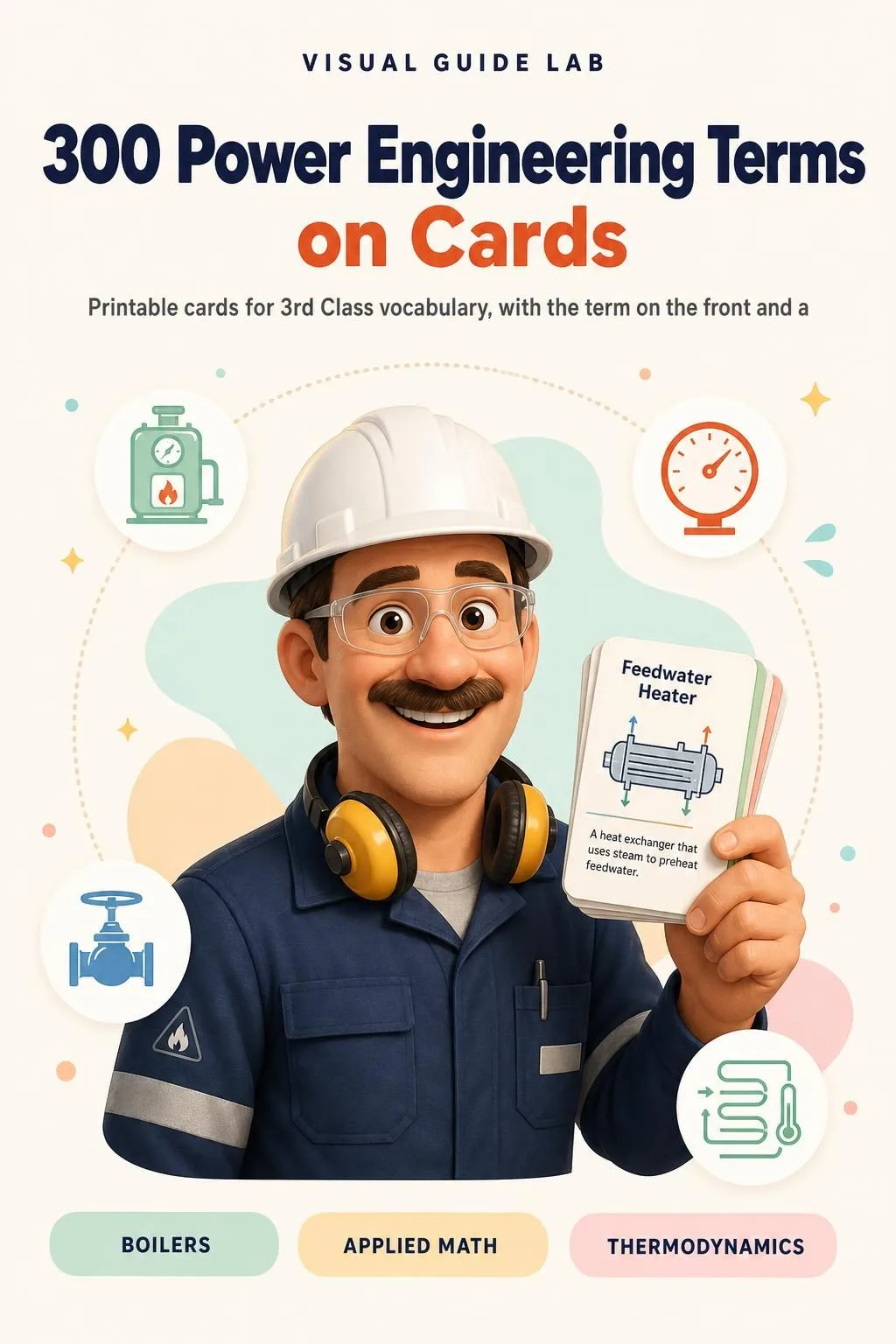
300 Power Engineering Terms on Cards

BONUS 2: “300 Power Engineering Terms on Cards”

Value on its own: CA$ 19.99

Printable cards for 3rd Class vocabulary, with the term on the front and a one-line definition plus a small sketch on the back, so you can review on a break or between rounds.

The Power Engineer 3rd Class Sketchbook + 2 Free Books

  • The Power Engineer 3rd Class Sketchbook: 109 drawn pagesCA$ 79.99
  • BONUS 1: Code and Plant Calculations WorkbookCA$ 24.99
  • BONUS 2: 300 Power Engineering Terms on CardsCA$ 19.99
  • High-resolution PDF to printIncluded
Total value CA$ 124.97
YOUR PRICE:
CA$ 34.99
You save CA$ 89.98
YES, I WANT THE POWER ENGINEER 3RD CLASS SKETCHBOOK FOR CA$ 34.99

📄 This is a digital PDF book sent to your email: nothing is printed or shipped.

Secure purchaseEncrypted payment30-day guarantee

PDF by email: The Power Engineer 3rd Class Sketchbook reaches your inbox as a PDF, and the two free books come by email too. One-time payment, no installments or hidden costs.

Is This Book for You?

You're taking the 3rd Class course

You're taking the 3rd Class course

Each paper's topics one page at a time, to review between shifts and classes, with every calculation solved in the same steps.

Your papers are coming up

Your papers are coming up

A full review sorted by paper (3A1, 3A2, 3B1, 3B2), plus the frequent mix-ups side by side and the exam day checklist.

You already run a big plant

You already run a big plant

The theory behind what you see on the console every shift: drum level, combustion control, turbines and Section I, drawn the way the equipment looks.

To Sum Up: Here Is What You Get

CA$ 124.97CA$ 34.99
YES, I WANT THE POWER ENGINEER 3RD CLASS SKETCHBOOK FOR CA$ 34.99

📄 This is a digital PDF book sent to your email: nothing is printed or shipped.

30DAYS
GUARANTEE

30-Day Guarantee

30-day guarantee: tell us what didn't work and we'll refund 100%.

You have 30 days to try The Power Engineer 3rd Class Sketchbook and the two free books. If a file doesn't open, if the content isn't what this page describes, or if something doesn't reach you, tell us what didn't work and we'll refund 100% of what you paid. One-time payment, no subscriptions, no surprises.

Frequently Asked Questions

How do I get the material?

You get an email, at the address you enter at checkout, with The Power Engineer 3rd Class Sketchbook as a high-resolution PDF, to read on your phone or print and take to the plant. The two free books, Code and Plant Calculations Workbook and 300 Power Engineering Terms on Cards, come in the same way, as PDFs by email.

Is it a monthly or one-time payment?

One-time payment in Canadian dollars (CAD). No installments and no subscription.

Who is it for?

For 4th Class power engineers (or equivalent) preparing the four 3rd Class papers in a Canadian province that uses the SOPEEC syllabus, for anyone rewriting a paper, and for operators who want a drawn review. Quebec has its own system and isn't covered, and neither are US state or city stationary engineer licences. Check the index above to see every topic.

What sources is it based on?

The SOPEEC Third Class Power Engineer syllabus (2016 edition) as published by Technical Safety BC, the 3rd Class exam pages of Technical Safety BC and TSASK, the public scope of CSA B51 and B52, and ASME Sections I, IV, V, VI, VII, VIII and IX and B31.1/B31.3. The Section I pages follow the code formulas (for example PG-27 for tube thickness), and each worked problem states the allowable stress it uses so you can follow every step. On the exam, use the values given in the question or in the code edition your jurisdiction specifies. Exam rules can change, so check your jurisdiction's rules.

Is it official material?

No. It's an independent study book. It isn't published or endorsed by SOPEEC, ABSA, TSSA, TSASK, Technical Safety BC or any other authority.

Does it replace my 3rd Class course?

No. It doesn't replace your course, its textbooks, your qualifying time or your plant's procedures. What it adds: your course explains each topic in pages of text; here each topic is one drawn page, every calculation is solved in the same steps (given, absolute pressure, formula, units checked, answer) and everything is sorted by paper, so you can see where you stand and review a topic in a few minutes between shifts.

Are the practice problems the ones on the exam?

No. The problems in the Code and Plant Calculations Workbook are written for this book and aren't official exam questions. They're there for practice.

Can I print it?

Yes. It's a high-resolution PDF: print the pages you need and take them to the plant, or read them on your phone.

What if I don't like it?

You have 30 days. Tell us what didn't work and we'll refund 100%.

One Last Thing Before You Decide...

You don't have to reread the same page hoping it sticks this time.

You don't have to memorize formulas you can't picture.

And you definitely don't have to walk into the exam not knowing where to start.

One last thing before you decide: you already have the course and the binder. What's missing is seeing each topic on one page, every calc in the same 5 steps. 109 drawn pages, two free books, PDF by email, and 30 days to tell us if it didn't work for you.

One-time payment: CA$ 34.99 · Guarantee: 30 days · PDF by email

YES, I WANT THE POWER ENGINEER 3RD CLASS SKETCHBOOK FOR CA$ 34.99

📄 This is a digital PDF book sent to your email: nothing is printed or shipped.